mySchedule
Timeline
Feb, 2025 - Jun, 2025
Skills
User Research
User Testing
Prototyping
Context
Redesigning Victoria University of Wellington's digital scheduling tools.
The scope of this project was to analyse Victoria University of Wellington's (VUW) existing digital scheduling tools, to identify students' experiences and behaviours to inform the redesign of the interactions through user research, usability testing, and iterative design methods.
Problem
The university's scheduling systems are not meeting the needs of students.
VUW students did not effectively use the existing platforms the university offers, leading many to seek out alternatives. Effective time management is important for students' wellbeing and academic performance, yet the current tools fail to support the habits students need to manage their time well.

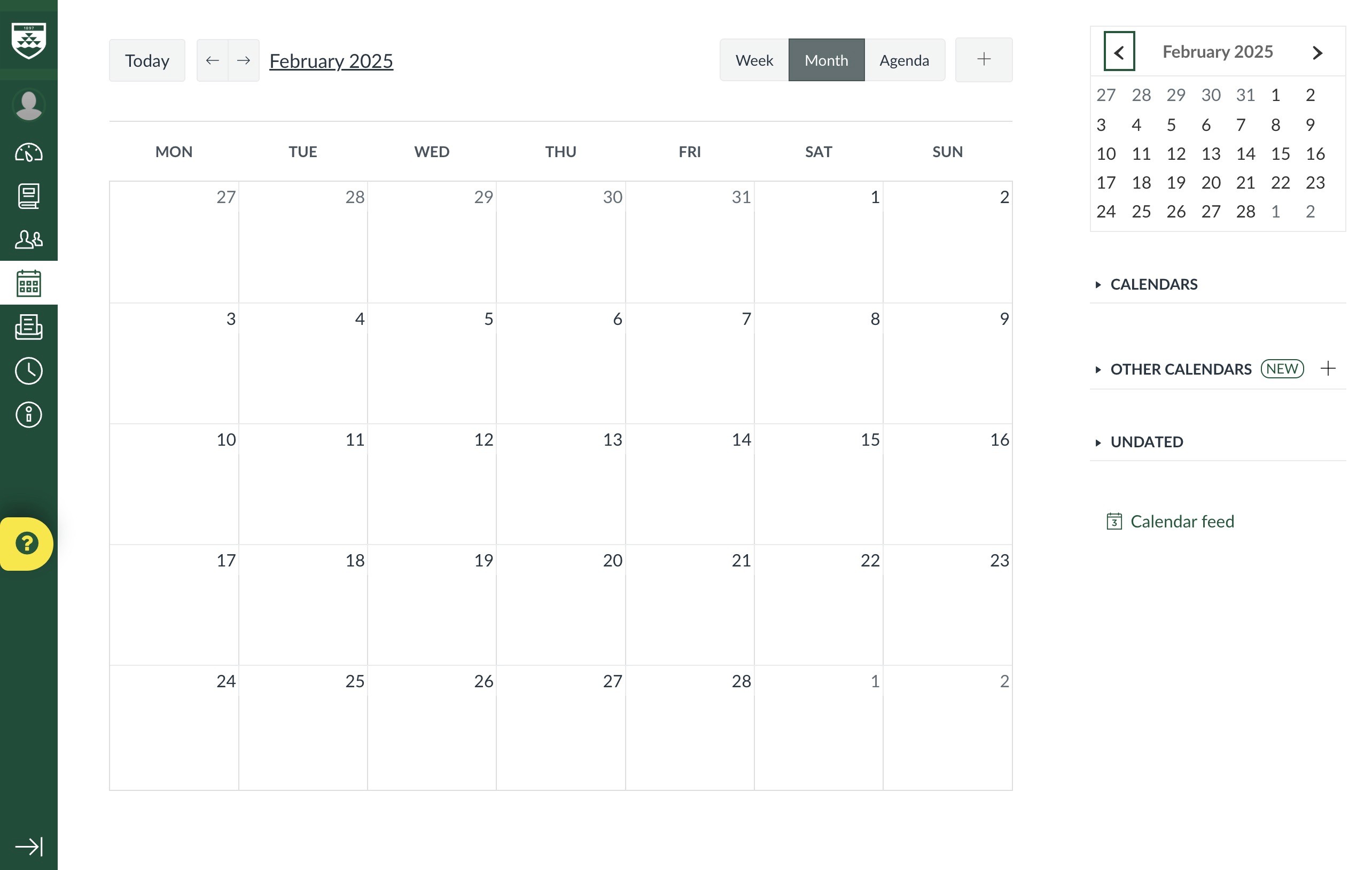
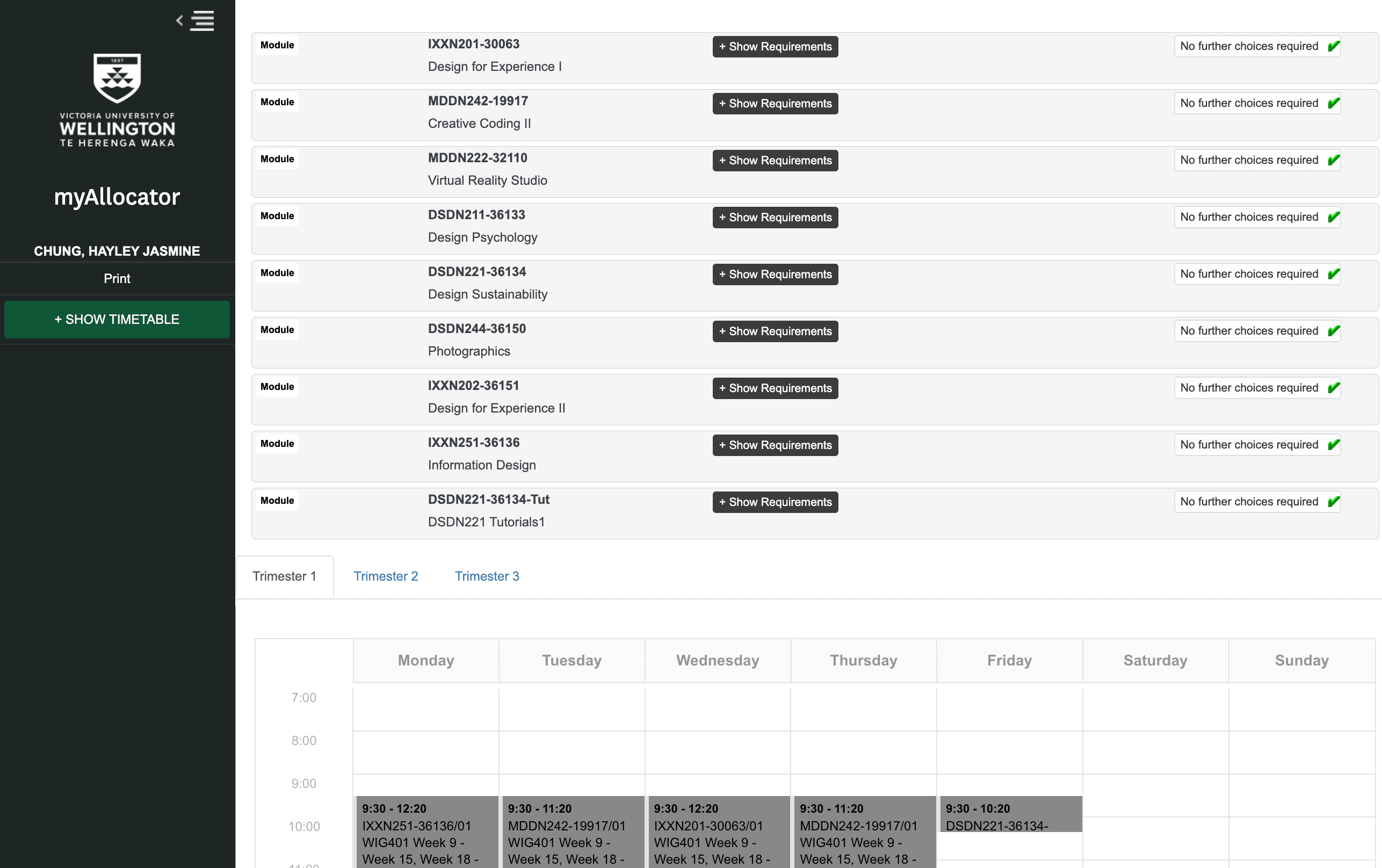
Existing VUW scheduling systems
Research
Using user research methods to understand the current tools and students' experiences, behaviours, and preferences.
Through secondary research, interviews, and observations with three VUW students, I investigated how students manage their time using VUW's scheduling tools. I then analysed and synthesised these findings using affinity maps, user personas, and a journey map to identify key insights and highlight potential design opportunities.


Affinity mapping and journey mapping to synthesise findings
Ideation
Students need one place for all their scheduling needs.
From the research and interviews, it was clear each system has a different purpose and different features, which causes confusion when trying to use them. This leads people to avoid VUW systems in favour of external alternatives.
These findings suggesting creating a platform with these goals in mind:
Following these goals, I proposed creating an app to make it easily accessible for university students. Ideation for the app began with creating a user flow and low-fidelity wireframes to map out the screens, actions, and heirachies.


Planning & ideating with user flows and wireframes
Process
Creating hi-fidelity prototype iterations with feedback from students.
Following the wireframes, I created a high-fidelity prototype in Figma, allowing users to explore example tasks, classes, and events, and experience setting up their own. The clean, minimal design provides space and creates clarity for a scheduling platform, while remaining in line with VUW's brand guidelines.
This prototype was tested with five VUW students, who were given the scenario of checking their current schedule before creating a task or event of their own. The key insights were:

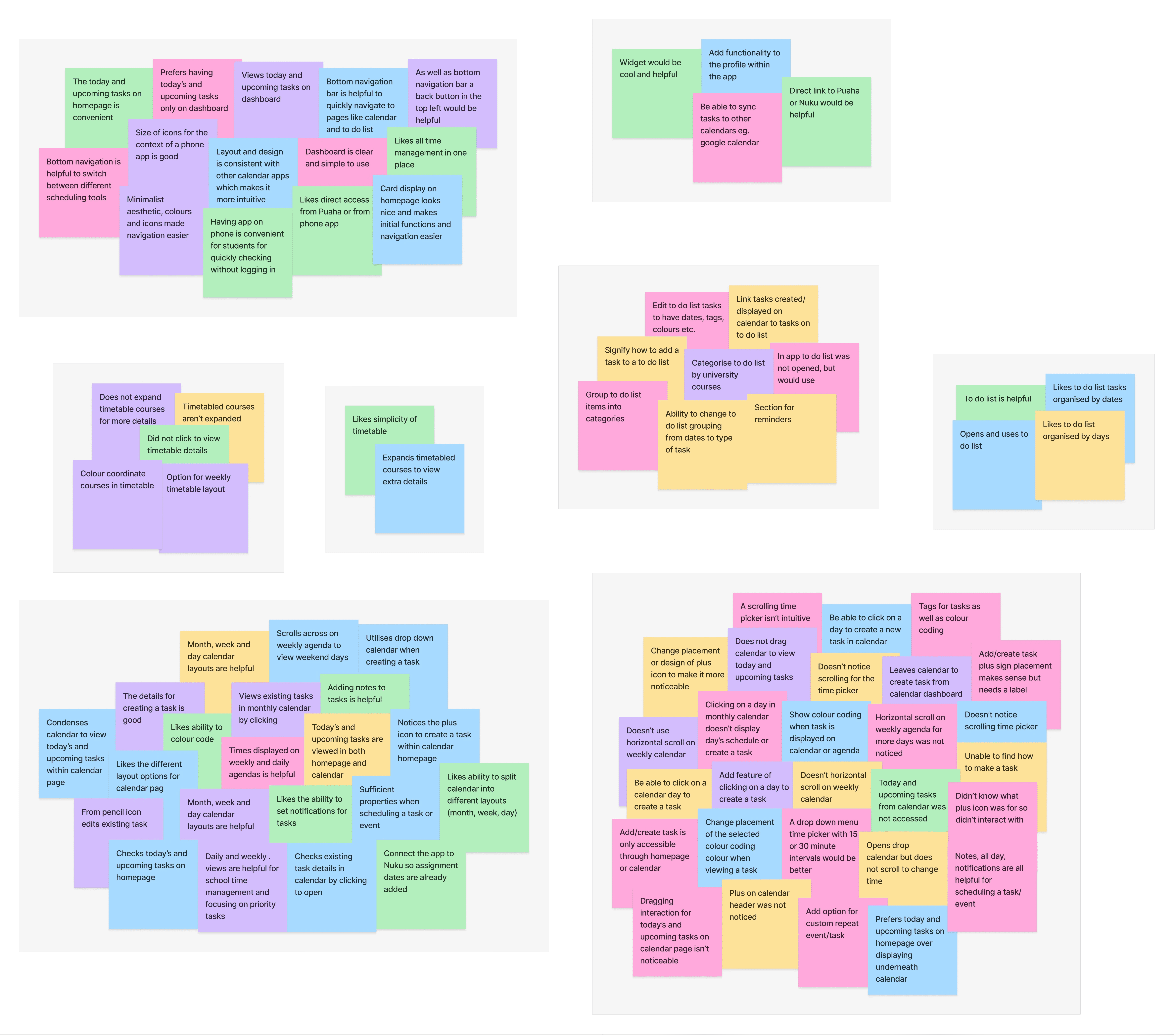
First prototype & affinity mapping findings from user testing
Based on this feedback, a second iteration was developed and tested, with final refinements focusing on colour contrast, element sizes for accessibility, layout hierarchy, and connectivity between the to-do list and calendar


AB testing different layouts & second prototype with changes noted
Solution
A consolidated scheduling app to support better time management in VUW students.
The final design addresses the core issues identified in research by consolidating VUW's scheduling systems into a single smartphone application, making time management more convenient and accessible for students. Within the app, students can navigate between their timetable, calendars, agendas, and to-do lists, and add personal events and tasks with assigned properties, bringing their entire schedule together in one place to support better time management habits.

Final prototype screens
REflection